Kenya's roads are governed by the Traffic Act (Cap 403) and enforced by the National Transport and Safety Authority (NTSA). Knowing these rules isn't just necessary for your driving test — it's essential for your safety and the safety of everyone on the road.
Quick Reference
- ▸Urban speed limit: 50 km/h
- ▸Highway speed limit: 80 km/h (heavy vehicles: 60 km/h)
- ▸Expressway limit: 110 km/h
- ▸Blood alcohol limit: 0.08% (zero for professional drivers)
- ▸Roundabouts: always give way to traffic already in the roundabout
- ▸Seatbelts: mandatory for ALL occupants in any position
Speed Limits in Kenya
Speed limits in Kenya are set under the Traffic Act and vary by road type. Speed governors are mandatory for all public service and commercial vehicles:
| Road Type | Private Vehicles | Heavy / Commercial Vehicles |
|---|---|---|
| Urban areas & built-up zones | 50 km/h | 50 km/h |
| Rural roads & highways | 80 km/h | 60 km/h |
| Expressways & motorways | 110 km/h | 80 km/h |
| School zones / Hospital areas | 30 km/h | 30 km/h |
| When towing another vehicle | 50 km/h | 40 km/h |
Speed Cameras Are Active
NTSA operates digital speed cameras on major routes including Thika Road, Mombasa Road, and Waiyaki Way. Fines are issued automatically. Exceeding 110 km/h can result in immediate licence cancellation.
Right of Way Rules in Kenya
At Uncontrolled Intersections
- Give way to traffic coming from your right at an uncontrolled junction
- Vehicles on major roads have priority over vehicles on minor roads
- Emergency vehicles (police, ambulance, fire) always have absolute right of way — pull over immediately
- Pedestrians have right of way at marked zebra crossings — you must stop
- Always give way to cyclists and motorcyclists when they are in a designated lane
Pedestrian Right of Way
- You must stop for pedestrians on a zebra crossing — failure is an offence
- Slow down near schools, hospitals, and bus stops
- Children crossing — always yield, even without a crossing
- Blind pedestrians using a white cane or guide dog always have priority
Roundabout Rules in Kenya
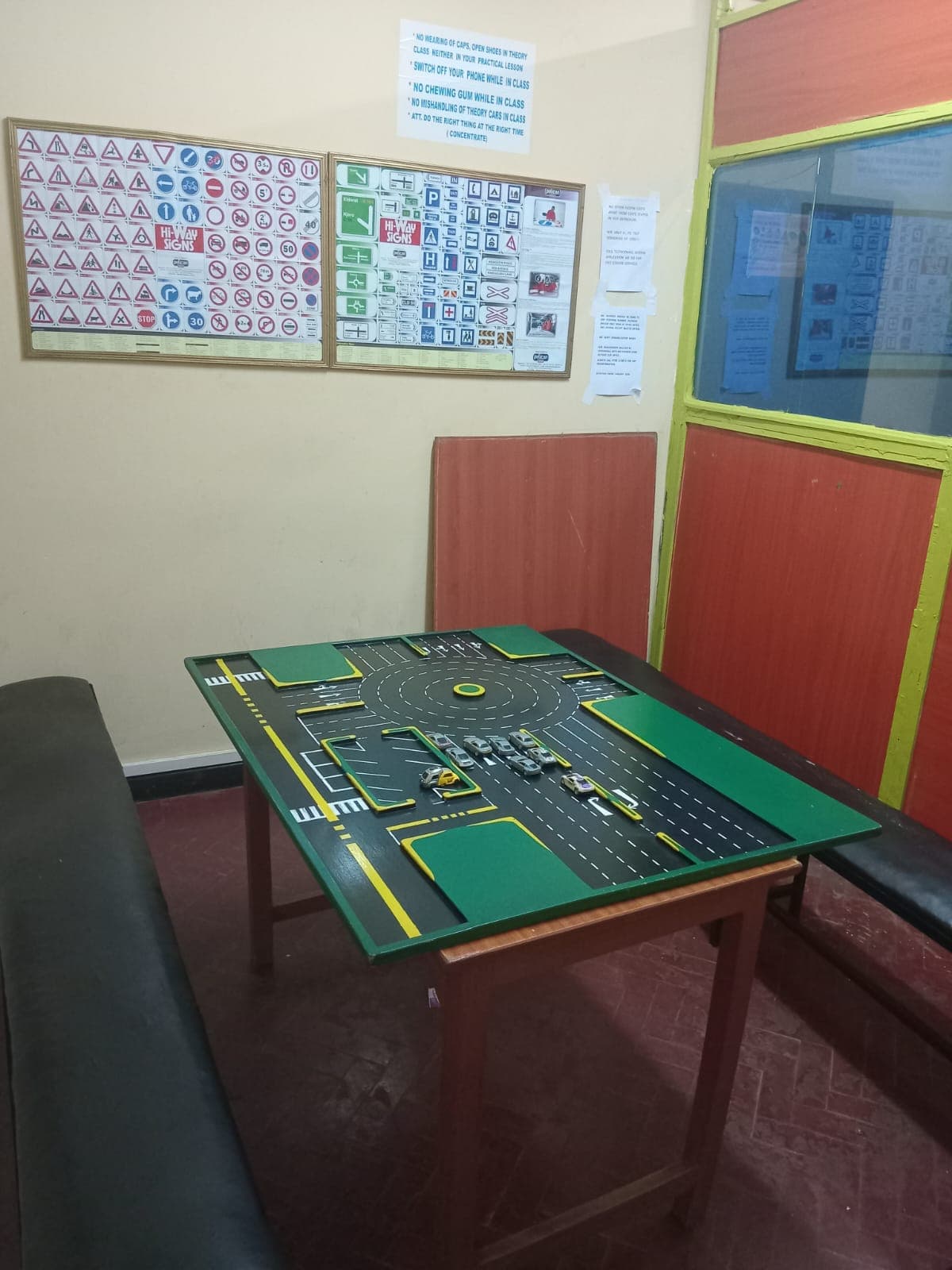
Roundabouts are common in Nairobi and other Kenyan cities. The rule is clear and consistent:
- 1Traffic already in the roundabout has priority — you must give way when entering
- 2Approach the roundabout from the left-hand lane (Kenya drives on the left)
- 3Signal right when you intend to take the first or second exit
- 4Signal left as you approach your exit to indicate you are leaving
- 5Do not change lanes inside a roundabout without checking mirrors and signalling
- 6Do not overtake inside a roundabout
- 7Keep to the left lane for the first exit; use the right lane for exits further around
Nairobi Roundabout Practice
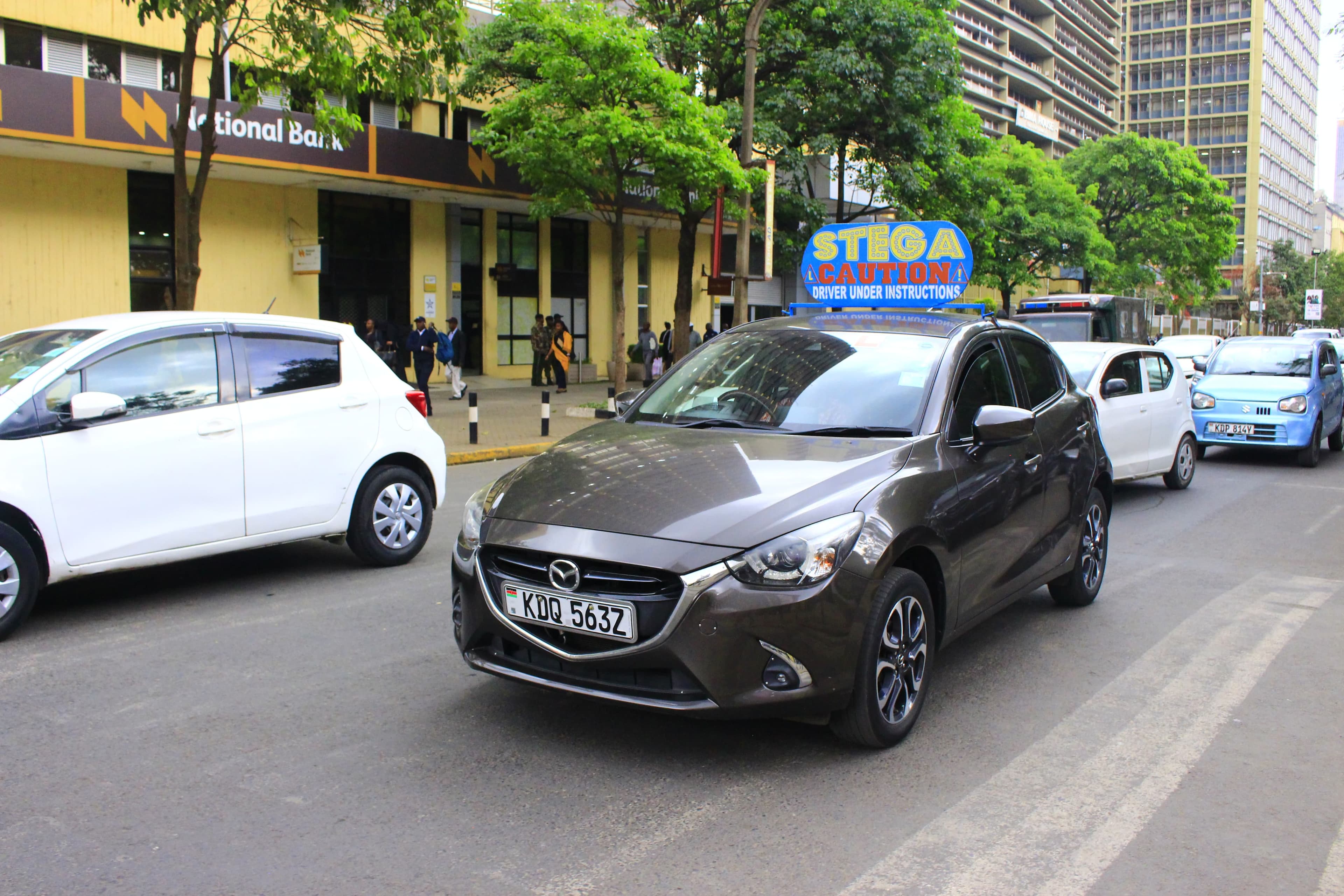
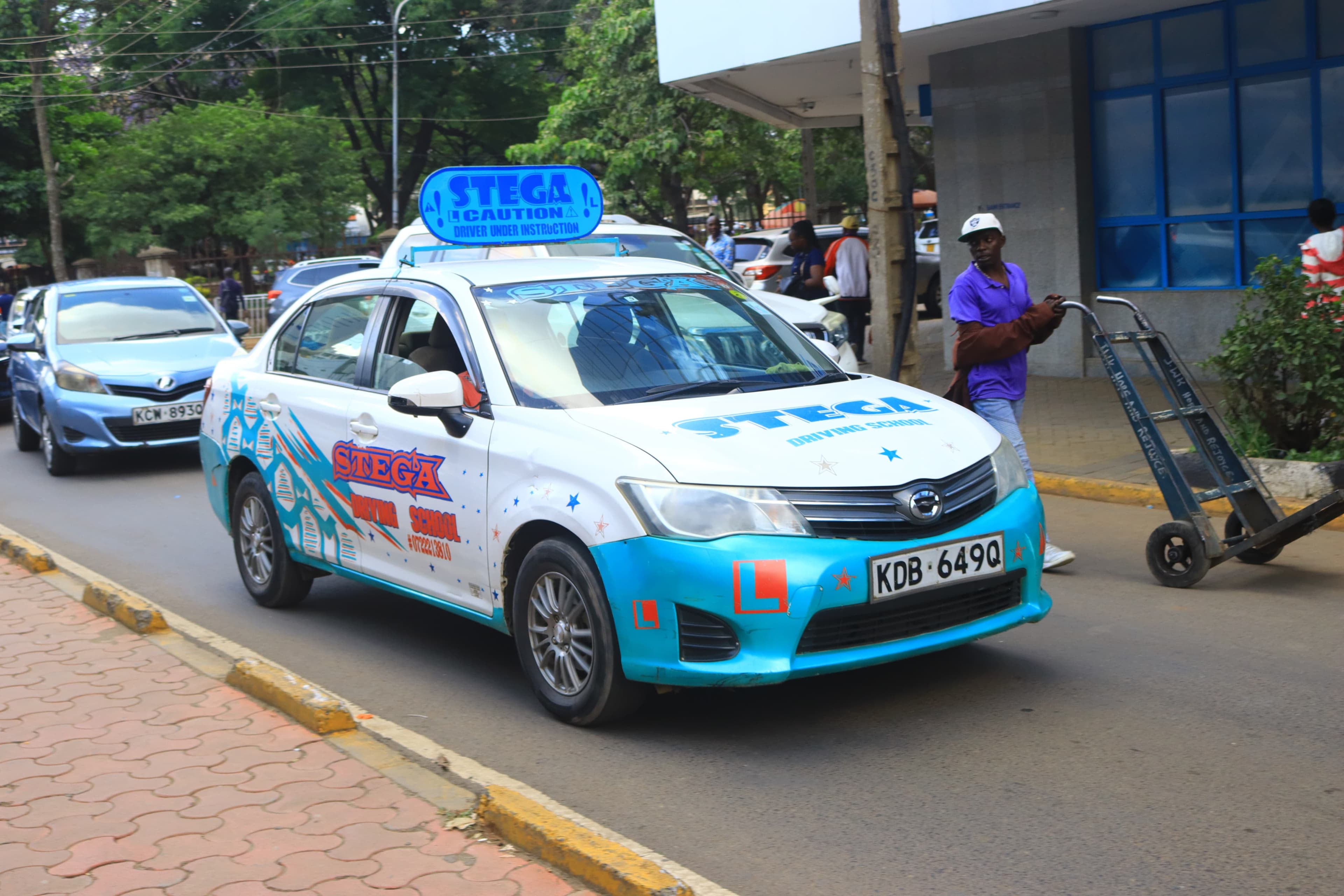
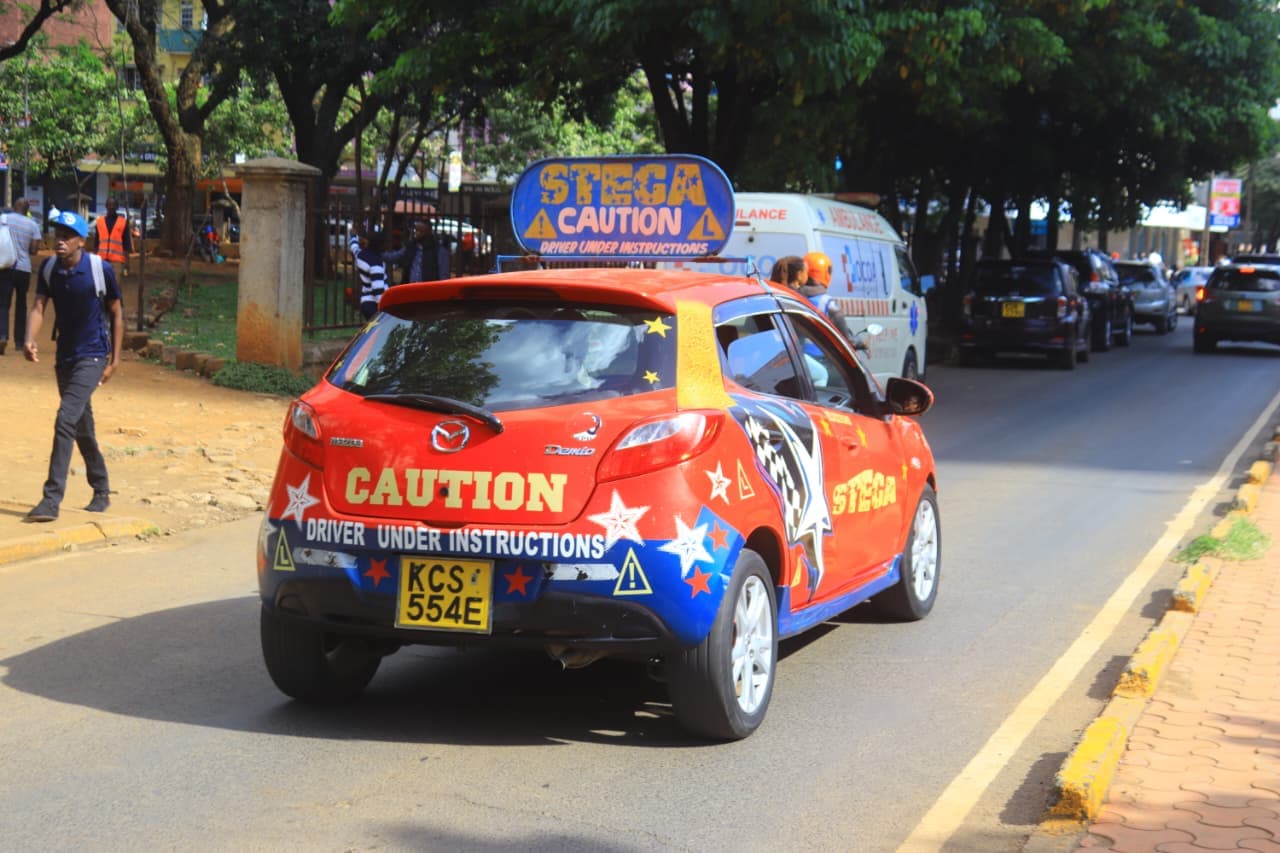
Nairobi has major roundabouts at Uhuru Highway, Kenyatta Avenue, and many suburban junctions. During your training, your Stega instructor will specifically practice these with you on the actual NTSA test routes.
Overtaking & Lane Discipline
- Always overtake on the right in Kenya (vehicles travel on the left, pass on the right)
- Never overtake at a solid white centre line — only at a broken/dashed line
- Do not overtake at bends, hills, zebra crossings, junctions, or where your view is restricted
- You must not overtake a vehicle that has stopped at a crossing for pedestrians
- Keep left except when overtaking — do not hog the right lane on dual carriageways
- Signal before changing lanes — give other drivers adequate warning
- Maintain a safe following distance — at least 2 seconds behind the vehicle in front
Drink Driving Laws in Kenya
Kenya's legal blood alcohol limit is 0.08% (80mg of alcohol per 100ml of blood) for private vehicle drivers. However:
| Driver Type | Legal BAC Limit |
|---|---|
| Private vehicle driver | 0.08% (80mg/100ml) |
| Professional / PSV driver | 0.00% (zero tolerance) |
| Learner driver (provisional) | 0.00% (zero tolerance) |
| Commercial vehicle driver (C1, C2) | 0.00% (zero tolerance) |
Drunk Driving Penalties
First offence: Fine of KSh 50,000 and/or up to 3 years imprisonment, plus automatic licence suspension. Second offence: Fine of KSh 100,000 and/or up to 5 years in prison, plus cancellation of licence. There is no 'just one drink' — NTSA enforcement is active on Nairobi roads especially after midnight.
Mobile Phone Rules While Driving
- Using a handheld mobile phone while driving is illegal — this includes calls, texting, and browsing
- Hands-free devices (Bluetooth earpieces, car kits) are permitted
- Even hands-free usage requires you to be in full control — distraction is still an offence
- Penalty for handheld phone use: KSh 10,000 to KSh 30,000 fine
- Repeat offences can lead to licence suspension
Seatbelt Laws in Kenya
- Seatbelts are mandatory for ALL occupants in ALL seats — front and rear
- The driver is responsible for ensuring all passengers under 18 are belted
- Children under 3 years MUST use an approved child car seat
- Fine for driver not wearing seatbelt: KSh 1,000
- Fine for passenger not wearing seatbelt: KSh 500
- Matatu and bus operators must ensure all passengers are seated before moving
Traffic Fines & Penalties in Kenya 2025
| Traffic Offence | Fine (KSh) |
|---|---|
| Speeding (up to 15 km/h over limit) | 3,000 – 5,000 |
| Speeding (30+ km/h over limit) | Up to 100,000 |
| Using handheld mobile phone while driving | 10,000 – 30,000 |
| Not wearing seatbelt (driver) | 1,000 |
| Not wearing seatbelt (passenger) | 500 |
| Driving without a valid licence | 50,000 |
| Drunk driving (first offence) | 50,000 + imprisonment possible |
| Jumping a red traffic light | 10,000 |
| Illegal parking | 2,000 – 5,000 |
| Overloading a vehicle | Variable (by excess weight) |
| Driving an uninsured vehicle | 50,000 |
| Driving an uninspected vehicle | 10,000 |
NTSA Uses Digital Enforcement
NTSA uses CCTV cameras, speed cameras, and the TIMS digital system to track offences. Fines can be issued remotely and accumulate on your licence record. Unpaid fines can prevent you from renewing your licence.
Frequently Asked Questions
QWhat is the speed limit in Nairobi city?
The speed limit in Nairobi and all urban areas in Kenya is 50 km/h. On the Nairobi Expressway, the limit is 110 km/h. School zones and hospital areas have a 30 km/h limit.
QWhat is Kenya's drink driving limit?
The legal blood alcohol concentration (BAC) limit for private vehicle drivers in Kenya is 0.08% (80mg per 100ml of blood). For professional drivers, PSV operators, and learners, the limit is zero — any alcohol is illegal.
QIs it illegal to use a phone while driving in Kenya?
Yes. Using a handheld mobile phone while driving is illegal in Kenya under the Traffic Act. The fine is KSh 10,000 to KSh 30,000. Hands-free Bluetooth devices are permitted.
QWho has right of way at a roundabout in Kenya?
Traffic already inside the roundabout has priority. Vehicles approaching the roundabout must give way and wait until it is safe to enter. This is the consistent rule at all Kenyan roundabouts.
QAre seatbelts compulsory for back seat passengers in Kenya?
Yes. Seatbelts are mandatory for all occupants in all seats — front and rear. The driver is legally responsible for ensuring all passengers under 18 are wearing seatbelts. Fines apply to both driver and unbelted passengers.

Stega Driving School
Nairobi's most trusted NTSA-approved driving school since 1995. 5 branches across Nairobi. 96% first-attempt pass rate. 1,000+ licensed graduates.
Learn about us →